




Lingering fatigue, a dull complexion, heavy digestion as winter draws to a close: through the colder months, the body gradually builds up waste. A detox cure is a way to support the organs of elimination so they can do their job more comfortably. With aromatherapy, everything hinges on two details that are easy to overlook: the chemotype of each essential oil and the dosage you follow. In this guide, we look at where toxins actually come from, why the liver deserves your attention first, which essential oils to reach for, and the everyday habits that make the difference.
What is a detox cure?
Detox is simply short for detoxification, the natural process by which the body neutralises and removes waste. A detox cure does not replace that process, it gives it a helping hand for a defined period. It is the kind of thing you turn to after a stretch of excess, or when the seasons shift. Spring is the classic moment, when the body comes out of a quieter winter and looks to find its rhythm again.
Where do toxins come from?
Some are endogenous, produced by the body itself through normal metabolism and digestion. Others are exogenous, coming from outside: an unbalanced diet, alcohol, tobacco, pollution, food additives. An imbalance appears when what comes in outpaces the body's capacity to process and clear it. Timing matters too. After the festive season, or after a sedentary winter, that load tends to be heavier. Spring is often felt as a fresh start, a good window to lighten things and get moving again.
The signs of an overload to watch for
There is no single, specific symptom. What you tend to notice instead is a cluster of small signals: fatigue that drags on, a tired-looking complexion, a coated tongue, sluggish digestion, bloating, sleep that does not quite restore you, and changes in the skin. None of this is an illness in itself. If these signs persist, the sensible first step is to speak to a healthcare professional rather than to assume a detox is the answer.
The liver and the emunctories, engines of elimination
Elimination is not the work of a single organ. The body relies on a network of routes that clear waste, and supporting them together is what makes a detox coherent rather than lopsided.
The five emunctories
There are five emunctories: the liver, the kidneys, the intestines, the skin and the lungs. The aim is to accompany them as a whole. Focusing on the liver alone, while ignoring the rest, tends simply to shift the problem somewhere else rather than ease it.
Why the liver comes first
Even so, the liver earns its place at the front of the queue. It neutralises a wide range of toxic compounds, stores nutrients, and secretes the bile needed to digest fats. It is also where alcohol is processed. When the liver is overloaded, the whole elimination chain slows down behind it. Active ingredients described as cholagogue and choleretic are of interest here because they help support the production and the flow of bile.
When and how to do a detox cure
The right time of year
The seasonal turning points are ideal, spring first and then autumn. A cure also makes sense after a period of excess, such as the festive season. What is best avoided is starting one in the middle of intense fatigue or acute stress, when the body has little to spare.
The main forms a cure can take
There is no single way to do this. Some people opt for a mono-diet, others for juice-based cures or intermittent fasting. Draining plants and herbal teas are another route, as is aromatherapy built around well-chosen essential oils. These approaches can be combined, for instance a lighter diet paired with draining essential oils.
How long and how often
Three weeks is a useful reference point. Beyond that, the added benefit tends to plateau. A short cure that you follow properly is worth far more than a long one you abandon halfway. Two cures a year, in spring and autumn, are plenty, ideally with a week's pause between cycles.
Detox essential oils and their dosage
Three essential oils stand out as first-choice options for a detox. They should always be diluted in a vegetable oil, and never taken neat by the oral route without the advice of a professional.
Lemon essence
Lemon is a particular case: it gives an essence rather than a true essential oil, obtained by cold expression of the zest. It is made up largely of limonene. It helps support the liver and digestion and contributes to drainage. It is the gentlest of the three, which makes it ideal for a first cure. One point to know: applied to the skin it is photosensitising, so sun exposure should be avoided after use. Taken by the oral route, that particular risk does not apply.
Carrot essential oil
Carrot essential oil is distilled from the seeds. It owes much of its interest to carotol, a sesquiterpenol, which supports the liver cells in their natural renewal. Many people notice a clearer complexion towards the end of a cure. It works well as a second choice, taking over from Lemon once the body has eased into things.
Rosemary verbenone essential oil
This is the most pronounced hepatobiliary ingredient of the three. Its activity comes from verbenone, a cholagogue ketone that helps stimulate the flow of bile. Ketones come with a real constraint, however: at a poorly managed dose they can be neurotoxic and abortive. For this reason Rosemary verbenone is not advised for pregnant or breastfeeding women, young children or people with epilepsy. It is best reserved for those who know what they are doing, ideally with the guidance of an aromatherapist.
Dosage and precautions
The usual approach is one to two drops in a teaspoon of vegetable oil, on a neutral tablet, or in a little honey, in the morning on an empty stomach, for three weeks, followed by a week's pause. There is no need to stack all three at once, start with Lemon, then bring in Carrot. These are concentrated active ingredients. They are not advised for pregnant or breastfeeding women, young children, or anyone on medication without professional advice. If you have a liver condition or take medicines, a word with your pharmacist is not optional. If you would rather use a ready-made formula, there is the Pranadraine elixir and the wider detox and slimming range.
The right everyday habits to support your detox
Essential oils are only part of the picture. The terrain you build day to day, in other words your overall lifestyle, weighs just as much in how a cure plays out.
The detox plate
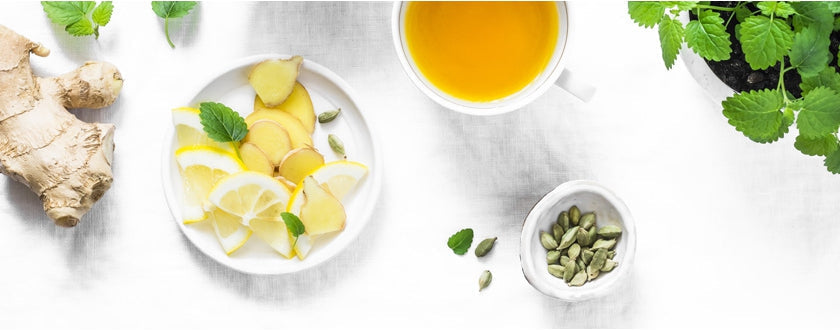
Lean towards green and bitter vegetables, which support the liver: artichoke, black radish, dandelion, rocket, endive. Fibre helps keep transit moving, and fresh fruit has its place too. At the same time, ease off on sugar, alcohol, processed dishes and cooked fats. A few simple boosts go a long way: lemon juice in warm water in the morning, turmeric, green tea, and crucifers such as broccoli. For digestion in particular, a handful of digestive essential oils can be a helpful complement.
Hydration, movement, sleep
Aim for around 1.5 litres of water a day to support the kidneys. Draining herbal teas, made from ash, cherry stalk or dandelion, are a pleasant addition. Thirty minutes of walking a day helps circulation and gentle perspiration. Sleep counts as well: the liver is especially active in the second half of the night, so giving it that rest is part of the picture.
The mistakes to avoid
The first is the three-day shock cure, so restrictive that it often ends in a rebound effect. The second is multiplying essential oils without a method, when in fact precision matters more than quantity. And the last is expecting a single cure to make up for a year of imbalance. A cure is a starting point for lasting habits, not a reset button.
Frequently asked questions about detox cures
Does a detox cure help you lose weight?
Not in itself. You may feel lighter, and short-term shifts in water can change the figure on the scales, but a cure does not melt away fat mass. What it can do is prepare the ground for a lasting rebalancing of your habits. Think of it as a starting point rather than a diet.
Can you do a detox cure while pregnant or breastfeeding?
Not without medical advice. Draining essential oils, Rosemary verbenone among them, are not advised during pregnancy or breastfeeding. The sensible course is to stick to lifestyle measures, and to seek professional advice before any active cure.
Is a detox cure risky for the liver or kidneys?
Done well, and kept gentle, it poses no particular risk for someone in good health. Problems tend to come from excess: cures that run too long, prolonged unsupervised fasting, or overdosed essential oils. If you have a liver or kidney condition, diabetes, or are on any treatment, get the go-ahead from your doctor first. And at the slightest unusual signal, stop and ask for advice.


