


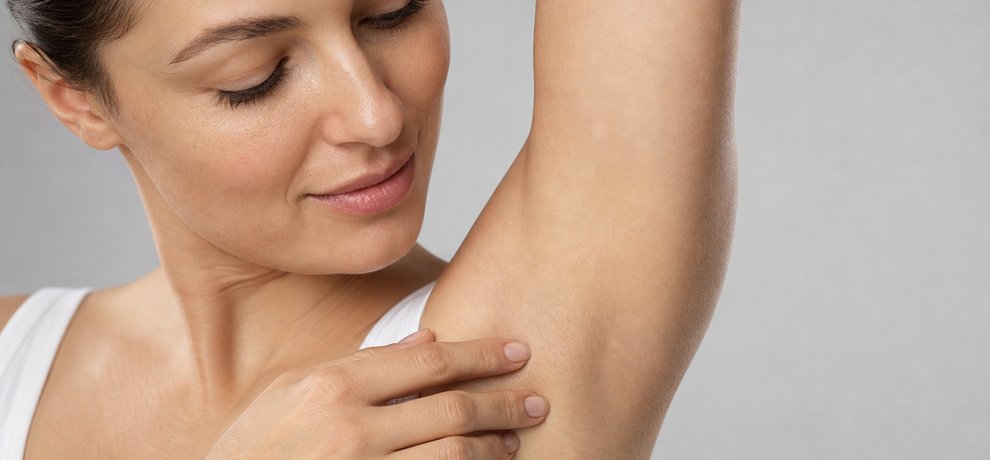
Excessive sweating affects around 1 to 3% of the population, often from adolescence onwards. Clammy hands, underarm marks, damp feet inside your shoes: when sweat goes beyond what the body needs to cool down, daily life quickly turns uncomfortable. Before considering a medical treatment, a few simple habits and aromatherapy help regulate perspiration. Here is how to spot abnormal sweating, pin down its causes and act naturally.
Normal sweating or excessive sweating?
Sweating is useful. The sweat glands release water onto the skin, and its evaporation cools the body down when its temperature rises, during exercise or in hot weather. An adult produces 0.5 to 1 litre of sweat a day on average, far more during a workout.
How to recognise excessive sweating
We talk about excessive sweating, or hyperhidrosis, when sweat appears with no obvious trigger: at rest, in cool weather, or in clearly disproportionate amounts. It can stay localised (underarms, palms, soles of the feet, face) or spread across the whole body. The sign worth watching: having to change several times a day, or avoiding certain social situations because of sweat.
Why do we sweat so much? The common causes
The causes split between lifestyle habits and internal factors.
Everyday triggers
Heat, synthetic fabrics, spicy food, coffee, alcohol and excess weight all push perspiration up. Stress plays its part too: emotional sweating comes mainly from the hands, underarms and forehead, set off by the nervous system rather than by the surrounding temperature.
Hormonal shifts
Hormones play a major role: puberty, pregnancy and above all menopause, when hot flushes come with sweating that is sometimes worse at night. Other internal imbalances can also show up as unusual sweating. If it appears suddenly, persists at night and lingers, a medical opinion is needed.
Sweating and skin imbalance
Prolonged excess moisture on the skin can encourage maceration, creating fertile ground for an imbalance of the skin microbiome and the growth of opportunistic yeasts or fungi (such as Candida or certain superficial fungal infections).
So it is not sweating itself that is the issue, but its build-up in warm, damp areas without enough evaporation.
Underarms, hands, feet, face: the most affected areas
Each area has its own constraints. Under the arms, sweat mixed with bacteria creates odour and marks. On the hands, it gets in the way of writing, shaking hands and using a touchscreen. On the feet, moisture trapped inside the shoe encourages odour and irritation. On the face and scalp, it shows at once and weighs on self-confidence.
Simple steps to limit sweating
- Choose natural fabrics (cotton, linen) that let the skin breathe, and change clothes as soon as they feel damp.
- Space out coffee, alcohol and very spicy dishes, which stimulate the sweat glands.
- Wash with a mild, pH-neutral soap, then dry the skin folds and the gaps between the toes thoroughly.
- For the feet, rotate pairs of shoes and pick socks made of natural fibres.
- Tame stress (breathing, walking, steady sleep) to ease the emotional side of sweating.
For skincare, gentle natural cosmetic products round off these habits without irritating the more delicate areas.
Regulating perspiration with essential oils
Several essential oils are recognised in aromatherapy for helping to regulate sweating and neutralise odour. They are always used diluted in a plant oil, never neat on the skin.
Palmarosa, the natural ally of skin balance
Palmarosa essential oil (Cymbopogon martinii) is especially useful in natural hygiene care thanks to its high geraniol content, a compound also naturally found in geranium.
Geraniol is recognised in several in vitro studies for its antibacterial and antifungal properties, in particular against the bacteria involved in breaking down sweat and causing body odour. Rather than blocking perspiration, Palmarosa essential oil works by limiting microbial growth, which preserves the body's natural elimination process while reducing odour.
It is therefore often used as a natural alternative to conventional deodorants, especially in minimalist or clean beauty routines.
On the skin, it is also valued for its balancing and regenerating action, which makes it an interesting oil for sensitive skin or skin prone to imbalance.
It is generally used diluted in a plant oil (jojoba, fractionated coconut and so on) and can be added to a homemade deodorant blend.
Clary sage, to regulate perspiration
Clary Sage essential oil can also be used to help regulate sweating, particularly when it is linked to hormonal changes or stress. It is always used with care, diluted in a plant oil, and calls for professional advice in the case of a hormone-sensitive profile.
A homemade deodorant in five minutes
Mix one tablespoon of Coconut plant oil, a pinch of baking soda and two drops of Palmarosa, then keep the balm in a small jar. To compare aluminium-salt-free options, our dedicated guide details the choices for a natural antiperspirant.
When should you see a doctor?
Excessive sweating is usually harmless. See a doctor if it appears suddenly, persists at night, comes with weight loss or fever, or if it spoils your daily life despite the right habits. A doctor can rule out an underlying cause and suggest suitable care. When hyperhidrosis becomes disabling, our article on how to relieve hyperhidrosis naturally goes deeper into aromatic blends. In the meantime, a lukewarm morning shower and a Palmarosa deodorant already change a lot.


