


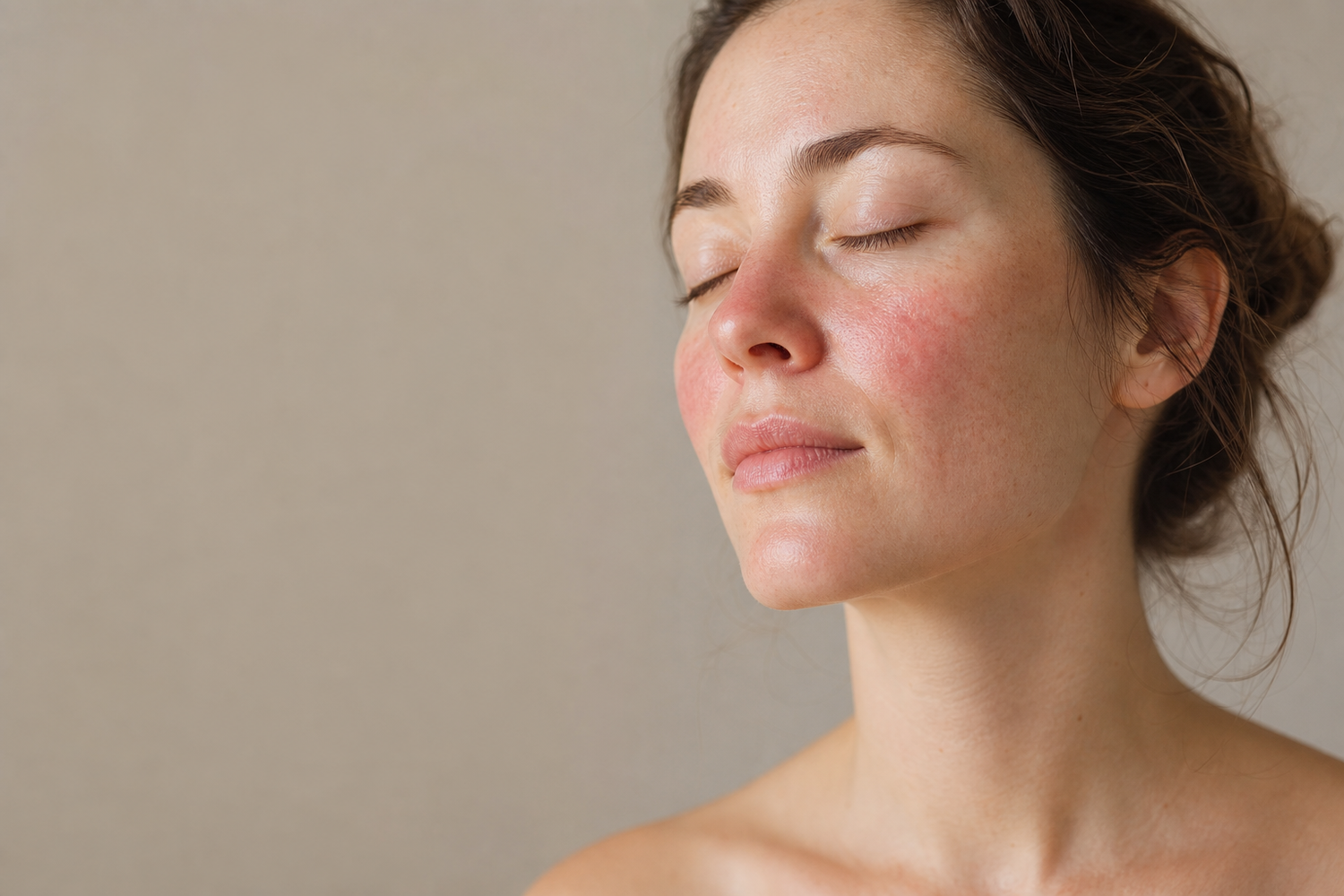
Facial redness can appear suddenly or build up gradually, causing discomfort that is both physical and aesthetic. This common phenomenon affects every skin type, although fair and reactive skin tends to be more exposed to it. Understanding the mechanisms behind facial redness is the first step towards adopting the right habits and restoring a soothed complexion. Aromatherapy offers natural, targeted solutions to support fragile skin on a daily basis.
What is facial redness?
Facial redness shows up as a more or less intense red colouring of certain areas of the skin. It is caused by the dilation of the blood vessels located in the dermis, just beneath the epidermis. This phenomenon, known as vasodilation, creates a rush of blood that becomes visible at the surface of the skin.
The areas most often affected are the cheeks, the nose, the forehead and the chin. Redness can be temporary, in which case it is referred to as a flush, or it can persist over time and develop into erythrosis, the first stage of rosacea. Depending on its origin, it can appear as diffuse patches, localised marks or a generalised flushing of the face.
Symptoms associated with facial redness
Beyond the visible red colouring, facial redness is often accompanied by other signs. A sensation of heat is common, sometimes combined with tingling or a feeling of tightness. Itching can also appear, particularly when an underlying skin condition is involved.
In some cases, slight swelling of the affected area or increased dryness complete the picture. Visible signs such as small apparent vessels or inflammatory spots are signals that call for medical advice. It is important to consult a healthcare professional when redness becomes long-lasting, worsens or is accompanied by pain.
The causes of facial redness
Environmental and everyday causes
The skin on the face is on the front line against external aggressions. Cold, wind or sudden changes in temperature trigger a reaction of the blood vessels, which dilate to regulate body heat. Exposure to UV rays without suitable protection is a major cause: sunburn weakens the skin barrier and triggers an inflammatory reaction that shows up as redness. Applying a suitable sunscreen is an essential preventive habit.
Consuming alcohol, spicy dishes or very hot drinks stimulates blood circulation and encourages redness. Some cosmetics containing synthetic fragrances, alcohol or harsh preservatives can also disrupt the skin's balance and cause reactions, especially in people with sensitive skin.
Emotional and hormonal causes
Stress, anger, embarrassment or a strong emotion trigger a response from the nervous system that causes the facial vessels to dilate rapidly. This emotional flushing is natural and temporary, but it can become a significant source of self-consciousness in social situations.
Hormonal fluctuations also play a part. Hot flushes linked to menopause appear as sudden redness of the face, neck and décolleté. Pregnancy and variations in the menstrual cycle can also heighten skin reactivity.
Dermatological and medical causes
Certain skin conditions explain persistent redness. Rosacea, also known as couperose, is a chronic condition that generally develops after the age of 30. It mainly affects the nose and the cheeks and is characterised by permanent redness, sometimes accompanied by small visible vessels or inflammatory spots.
Acne causes redness linked to the inflammation of the follicles. Eczema and atopic dermatitis lead to red patches accompanied by dryness and itching. Psoriasis appears as red patches that flake. Allergic skin reactions, whether linked to a food, a cosmetic product or another factor, also show up as localised or diffuse redness.
When redness becomes chronic or is accompanied by unusual symptoms, it is recommended to consult a dermatologist to establish an accurate diagnosis.
The different types of facial redness
It is helpful to distinguish between the different types of redness in order to address them more effectively. A flush is a brief, passing reddening, often linked to an emotion or physical effort. Erythrosis corresponds to diffuse, persistent redness, a sign of established vascular fragility. Couperose is characterised by small dilated vessels visible at the surface, mainly on the cheeks and the wings of the nose. Papulopustular rosacea, a more advanced stage, combines permanent redness with inflammatory lesions.
Identifying the type of redness you experience makes it possible to choose the most suitable approach, whether cosmetic, aromatic or medical.
Essential oils to soothe facial redness
Aromatherapy offers natural, targeted solutions for redness. Certain essential oils for the skin have properties that help soothe reactive skin and support cutaneous microcirculation.
Italian helichrysum: the anti-redness ally
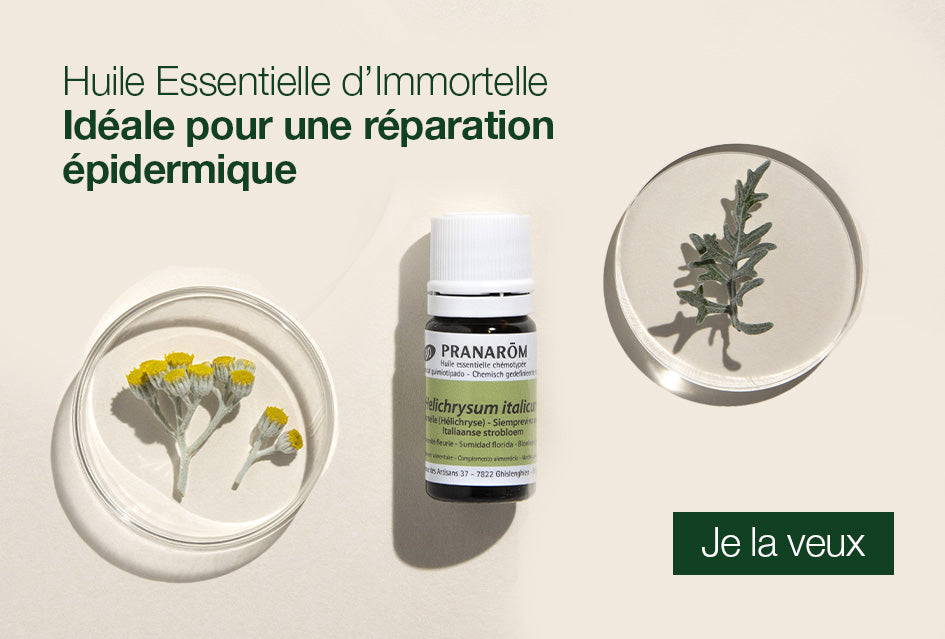
The essential oil of Italian helichrysum (Helichrysum italicum) is a benchmark in aromatherapy for cutaneous circulatory concerns. Traditionally recognised for its properties on local circulation, it helps reduce the appearance of small vessels and contributes to soothing skin prone to redness. Its chemotype rich in neryl acetate makes it a particularly interesting oil for facial care.
German chamomile (matricaria): the skin anti-inflammatory
German chamomile (Matricaria recutita) contains chamazulene, a compound that gives it its characteristic blue colour and its soothing properties. It helps calm reactive and irritated skin and proves useful in cases of diffuse redness linked to skin sensitivity. Gentle and well tolerated, it fits easily into a daily facial routine.
Rose geranium: regulating microcirculation
The essential oil of rose geranium (Pelargonium graveolens) is valued for its skin-toning properties. It helps regulate microcirculation and rebalance sensitive skin. Astringent and regenerating, it features in many synergies designed for facial care.
True lavender: calming and repairing the skin
Versatile and gentle, the essential oil of true lavender (Lavandula angustifolia) is recognised for its soothing and healing properties. It helps calm irritation and support the repair of a weakened skin barrier. It is often the first oil recommended for skin prone to redness, including after mild sunburn.
How to use essential oils on the face safely
Essential oils should never be applied undiluted on the face. They must be diluted in a suitable organic vegetable oil. Calophyllum vegetable oil, recognised for its circulatory properties, or rosehip vegetable oil, regenerating and soothing, are ideal carriers.
A dosage of 1 to 2% of essential oil in vegetable oil is recommended for the face, which is around 3 to 6 drops per 15 ml of carrier. A skin test on the crook of the elbow 24 to 48 hours before the first use is essential to rule out any risk of reaction.
Essential oils are not recommended for pregnant or breastfeeding women or for children under 6, unless advised otherwise by a healthcare professional. Choosing chemotyped essential oils, certified H.E.C.T., guarantees their purity, their precise botanical identification and their safety of use.
Natural facial hydrosols, such as Italian helichrysum or chamomile hydrosol, are an even gentler alternative. They can be used as a mist or a toning lotion every day, even on the most sensitive skin.
Adopting a natural anti-redness routine every day
Caring for skin prone to redness starts with gentle gestures. Delicate cleansing, without harsh products, helps preserve the skin barrier. The daily application of a treatment based on vegetable oil enriched with targeted essential oils helps soothe and strengthen the skin.
Protecting your face from external aggressions is essential: apply a suitable sunscreen, avoid overly abrupt temperature changes and limit exposure to wind and cold without protection. Diet also plays a role: reducing the consumption of alcohol and very spicy dishes can help lower the frequency of redness.
Finally, managing stress through relaxation techniques helps limit emotional vascular reactions. Combined with a suitable aromatic routine and with DIY facial care kits formulated for reactive skin, scientific aromatherapy offers a complete and respectful approach to restoring an even, soothed complexion.


