


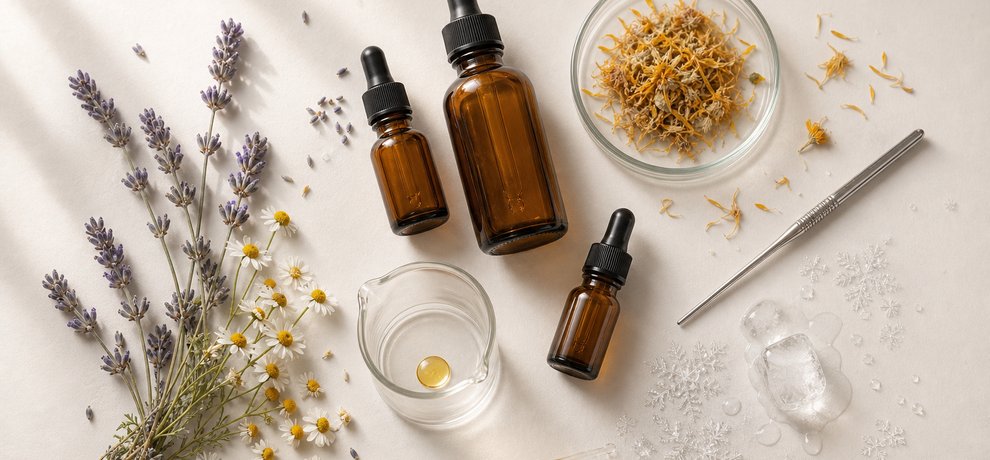
Cold urticaria is a skin condition that remains little known, yet it can significantly affect daily life. It appears upon exposure to cold in any form and can trigger a strikingly visible skin reaction. This article offers a complete exploration of cold urticaria, from its definition to natural solutions, including diagnosis and medical treatments.
What is cold urticaria?
Cold urticaria is a specific form of urticaria triggered by contact with low temperatures or a sudden drop in body temperature. It belongs to the category of physical urticarias, alongside thermal urticaria and pressure urticaria.
Unlike a classic allergy linked to a specific allergen, cold urticaria stems from an immune system reaction to an environmental stimulus. Cold acts as a triggering factor, leading to a release of histamine that causes the skin symptoms. To support your defences against seasonal stressors, discover our immunity range.
The different forms of cold urticaria
Several types of cold urticaria exist, the acquired form being the most common. It often appears in adolescence or adulthood without an obvious cause. More rarely, a familial form may be observed, linked to a genetic origin.
In some cases, cold urticaria can be secondary to an underlying disease or associated with another inflammatory condition. The form also varies according to the intensity of the reaction, its duration and the body areas affected, such as the hands, face or forearms.
Who is concerned?
Cold urticaria can affect many people but is more often diagnosed in young adults. Women appear to be slightly more affected than men, even if data vary depending on the case.
Certain situations increase the risk, in particular repeated exposure to cold, swimming in cold water or professions involving outdoor work. Patients with existing skin sensitivity or another form of urticaria are also more at risk.
Causes and triggering factors
The exact causes of cold urticaria are not always clearly identified. In many cases, no specific origin is found, which complicates management.
Among the most common triggers are direct contact with cold, winter winds, cold water, the consumption of very cold drinks or certain frozen foods. Rapid temperature changes, going from warm to cold or vice versa, can also provoke a reaction.
The mechanism of the cold reaction
Upon exposure to cold, the skin reacts with an excessive release of histamine by mast cells. This inflammatory reaction causes vasodilation and increased vascular permeability, resulting in patches, redness and itching.
In some people, this reaction can be more intense and accompanied by deep swelling, reflecting a more severe involvement. In rare cases, generalised exposure can lead to a systemic reaction.
Everyday risk situations
Several everyday situations increase the risk of cold urticaria. Swimming in an unheated pool, practising winter sports, contact with cold or metallic objects, or simply going outside without adequate protection in winter can trigger an episode.
Insufficiently warm clothing, washing hands with cold water or drinking iced beverages are also common examples of triggering situations.
Recognising the symptoms of cold urticaria
Skin manifestations
Symptoms of cold urticaria generally appear a few minutes after contact with cold. They take the form of red patches, sometimes raised, with mild to intense itching. For more on managing these skin reactions, read our article on natural solutions for skin problems.
Exposed areas are the most affected, particularly the face, hands, forearms or legs. The skin may also feel a burning or tingling sensation.
Warning signs of a severe reaction
In some cases, cold urticaria can progress to more serious manifestations. Significant swelling, malaise, breathing difficulties or a drop in blood pressure should raise alarm.
Although rare, anaphylactic shock remains possible, particularly in cases of massive exposure such as swimming in cold water. These situations require hospital care and the use of an adrenaline auto-injector for at-risk patients.
Diagnosis: how to confirm cold urticaria?
The ice cube test
Diagnosis is based primarily on patient interview and clinical observation. The ice cube test is the reference examination. It involves applying an ice cube to the skin for a few minutes, then observing the appearance of a local reaction.
A patch or eruption at the point of contact generally confirms the diagnosis of cold urticaria.
Additional examinations
In some cases, additional tests may be prescribed to rule out an associated disease or another form of urticaria. A consultation with a dermatologist or specialist helps adapt management and guide patients towards the most appropriate strategies.
Medical treatments for cold urticaria
Antihistamines as first-line treatment
Antihistamines are the reference treatment. They reduce symptoms by blocking the action of histamine. Antihistamine intake can be daily or adapted according to at-risk situations.
In some patients, a progressive increase in doses may be considered under medical supervision.
Emergency treatments
In case of a severe reaction, emergency treatment is essential. At-risk individuals may be prescribed an adrenaline auto-injector and must be trained in its use.
Aromatherapy to soothe cold urticaria
Aromatherapy is a useful complementary approach to help soothe the skin and reduce the discomfort linked to cold urticaria. It does not replace medical treatment but can support symptom management.
Soothing and antihistamine essential oils
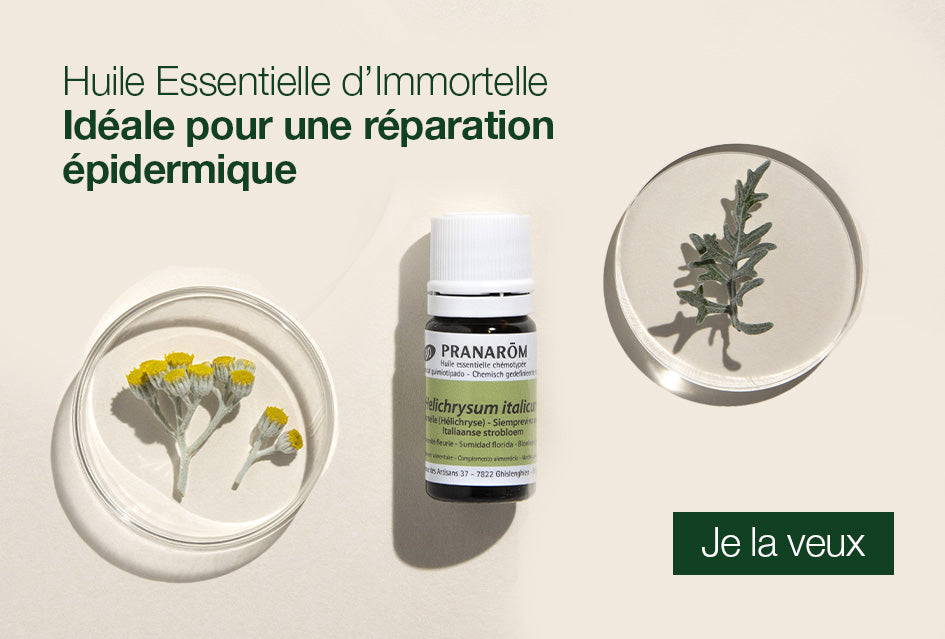
Some essential oils have calming and anti-inflammatory properties. The essential oils of Noble Chamomile, true Lavender or Rose Geranium are often cited for their ability to help soothe redness and itching. To choose the variety best suited to your needs, see our guide on which Lavender essential oil to choose.
They can help modulate the skin reaction and improve comfort during periods of exposure to cold. Also find our advice to choose the right essential oil to soothe itching.
Virgin plant oils to calm the skin
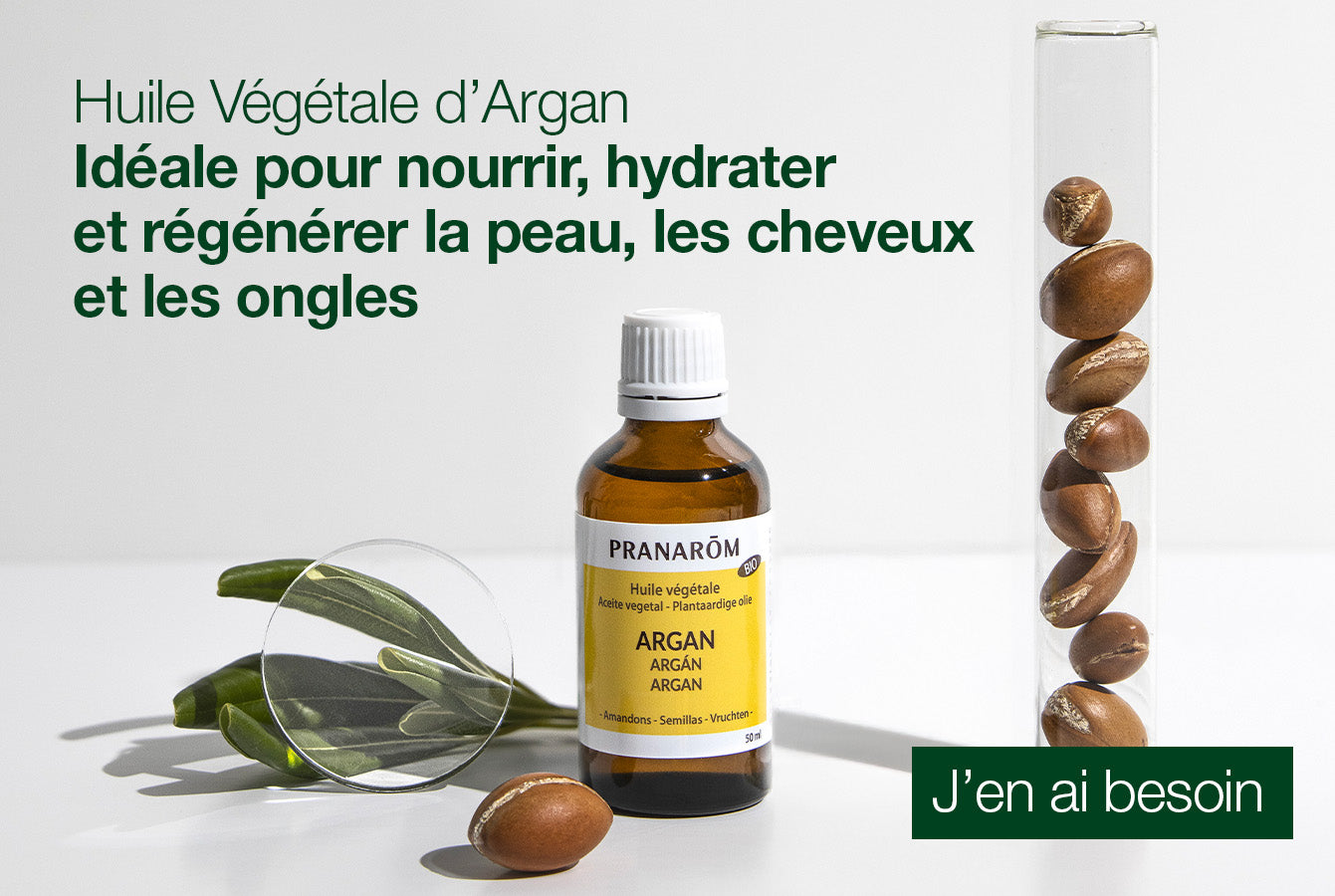
Virgin plant oils play an essential role as a carrier and as a nourishing care. Calendula, Sweet Almond or Jojoba plant oils contribute to strengthening the skin barrier and limiting skin sensitivity to external stress. Discover our virgin plant oils collection to find the most suitable carrier.
How to use them safely
Essential oils should always be used diluted and with care. A prior skin test is recommended, especially for people with sensitive skin or a known allergy.
Local applications should be reserved for the areas concerned and avoided on the face without professional advice. Some oils are contraindicated for pregnant women or children.
Preventing episodes: practical daily advice
Prevention relies on adapting daily habits. Wearing warm and protective clothing, avoiding sudden temperature changes, limiting direct exposure to cold and choosing drinks at room temperature are simple yet effective measures.
It is also advised to anticipate at-risk situations such as swimming or outdoor activities and to follow the treatment prescribed by the doctor.
FAQ: Cold urticaria
How to soothe cold urticaria naturally?
In addition to medical treatment, natural approaches such as aromatherapy, applying soothing virgin plant oils and adapting daily habits can help reduce symptoms.
What are the symptoms of a cold allergy?
Symptoms include patches, redness, itching and sometimes swelling after contact with cold. In rare cases, general manifestations may occur.
What is thermal urticaria?
Thermal urticaria is another form of urticaria triggered by heat or a rise in body temperature, for example during exercise or sun exposure.
Why does skin itch when exposed to cold?
Cold causes an inflammatory reaction linked to histamine release, leading to irritation of nerve endings and a sensation of mild to intense itching.


