

A nail that turns yellow may seem harmless at first glance, but this phenomenon often raises questions, both in terms of beauty and health. When the natural colour changes and the nails take on a yellow tint, it is reasonable to wonder about the causes, and whether this is a purely cosmetic issue or the sign of an underlying condition. In aromatherapy, certain Essential Oils offer valuable natural solutions to support conventional treatments and help restore healthy nails.
In this article, you will explore the possible causes of nail yellowing, the warning signs to watch for, and suitable aromatic protocols, while respecting the essential precautions.
Why do nails turn yellow? The causes to identify
Nail yellowing corresponds to a gradual change in their colour. This change can affect both fingers and toes, sometimes giving the impression of yellow feet. Several causes can be behind this phenomenon, ranging from harmless factors to conditions requiring medical advice.
Harmless causes: nail polish, smoking and ageing
In many cases, a yellowing nail is linked to everyday habits. Frequent use of dark nail polish, without a protective base coat, encourages pigments to migrate into the keratin. Some polishes also contain chemical substances that alter the nail's natural colour over time.
Smoking is another common cause. Nicotine and smoke residues build up on the fingers, leading to a gradual yellow discolouration. Ageing, meanwhile, is a natural process: with age, the nail's texture changes, its growth slows and discolouration can appear.
These harmless causes generally do not lead to painful symptoms, but they can affect appearance and result in yellowed nails that are sometimes dull or more fragile.
Nail fungus (onychomycosis): the most common cause
Nail fungus, also known as onychomycosis, is one of the most common causes of yellow nails. This infection is caused by microscopic fungi that thrive in warm, damp environments. The feet are particularly affected, especially when walking barefoot in public places such as swimming pools or changing rooms. To limit the risk of contamination inside footwear, discover our anti-fungal spray for shoes.
Fungus shows up as gradual yellowing, sometimes accompanied by thickening, a change in shape or whitish spots. Toenails are more often affected, but fingernails can also be involved. Without suitable treatment, the infection can spread and weaken the nail over the long term.
Underlying conditions: psoriasis, diabetes and yellow nail syndrome
Certain systemic conditions can explain a change in nail colour. Nail psoriasis often causes discolouration, thickening and surface irregularities. Diabetes, by altering blood circulation and immune defences, promotes infections and nail disorders.
More rarely, yellow nail syndrome is a condition marked by an intense yellow colour, slowed growth and sometimes associated respiratory or lymphatic disorders. In these cases, yellowing is a clinical sign in its own right and requires medical follow-up.
Recognising the warning signs: when to seek advice?
It is important to know how to tell simple cosmetic yellowing from a health problem. Some signs should alert you: pain, an unusual smell, the nail lifting away, significant thickening or rapid spread to several nails. General symptoms or worsening despite regular care are also a signal.
If in doubt, it is advisable to consult a doctor or dermatologist. They can establish a precise diagnosis and suggest appropriate treatments, particularly in the case of nail fungus or associated conditions.
Essential Oils for yellow nails: the power of aromatherapy
Aromatherapy offers a valuable complementary solution to support conventional treatments. Certain Essential Oils have antifungal, antibacterial and regenerating properties that are useful in cases of yellow nails.
Tea Tree Essential Oil (Melaleuca alternifolia): the benchmark antifungal
Tea Tree essential oil is a must in cases of fungus. Renowned for its broad spectrum of action against fungi and bacteria, it helps limit the proliferation of the agents responsible for the infection. Used regularly and applied locally, it contributes to cleansing the nail and slowing yellowing. To learn more, read our clinical study on the effectiveness of Tea Tree against fungus.
Palmarosa, Bay Laurel and Geranium Essential Oils: the lesser-known allies
Other Essential Oils complement the action of Tea Tree. Palmarosa supports skin regeneration, Bay Laurel has valuable antifungal properties, while Rose Geranium helps improve the overall appearance and health of the nail. These Essential Oils can be combined in synergy to reinforce their effectiveness. Browse our selection of essential oils for the skin to discover other active ingredients suited to skin and nail care.
How to choose a quality Essential Oil (chemotyped)
To ensure optimal effectiveness, it is essential to choose a chemotyped Essential Oil. This designation guarantees a precise botanical and biochemical identification, helping to limit the risk of ineffectiveness or adverse effects.
Aromatic protocols to help address a yellowing nail
The following protocols are part of a natural, gradual approach. They do not replace medical treatment, but they can be a relevant supportive solution.
Antifungal synergy for local application
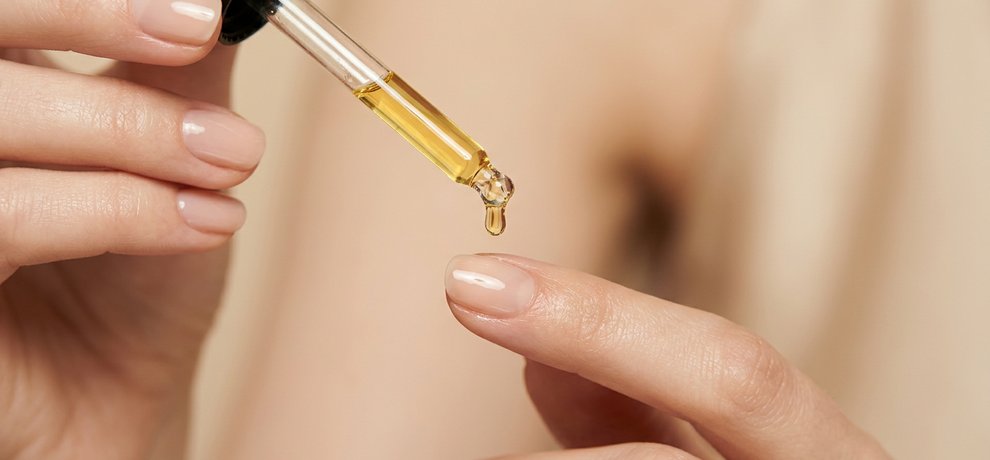
You can prepare a synergy based on Tea Tree, Palmarosa and Bay Laurel Essential Oils, diluted in a Plant Oil as a carrier. Apply directly to the affected nail, once or twice a day, after carefully cleaning and drying the area.
Aromatic nail bath: recipe and instructions
A nail bath helps soften the surface and promote the penetration of active ingredients. In a bowl of lukewarm water, add a suitable dispersant and a few drops of Essential Oils. Soak the nails for around ten minutes, then dry carefully.
Carrier plant oil: which one to choose?
The Plant Oil plays a key role in the application. Castor Plant Oil is often preferred for its good affinity with keratin and its nourishing effect. It helps limit fragility and support regrowth. Discover our range of plant oils to choose the carrier best suited to your needs.
Precautions for using Essential Oils on nails
Essential Oils are powerful and require certain precautions.
Contraindications: children, pregnant women, sensitive skin
Some groups, such as children or pregnant women, should avoid using certain Essential Oils. Sensitive skin may also react. A preliminary skin test is recommended.
Duration and frequency of application
Regularity is essential, but treatments need to be carried out over time. Daily application over several weeks is often necessary, without exceeding the recommended doses.
Preventing nail yellowing day to day
Prevention relies on simple habits: using a base coat before polish, limiting exposure to harsh products, carefully drying the feet after showering and avoiding walking barefoot in risky public places. A healthy lifestyle and attention to overall health also help keep nails healthy.
FAQ: yellow nails and aromatherapy
What causes a nail to turn yellow?
The causes include the use of nail polish, smoking, ageing, fungal infections, certain conditions such as psoriasis or diabetes, as well as environmental factors.
How can you remove nail yellowing naturally?
Natural solutions exist, such as aromatherapy combined with good hygiene. Ingredients like vinegar or baking soda are sometimes mentioned, but their effectiveness remains limited compared with targeted protocols.
Which conditions cause a change in nail colour?
Psoriasis, diabetes and yellow nail syndrome are among the conditions that can lead to a lasting change in colour.
What solutions are there to whiten yellowed nails?
Combining regular care, suitable Essential Oils and preventive measures forms a holistic approach to improving the appearance of yellowed nails and supporting their health over the long term.


