


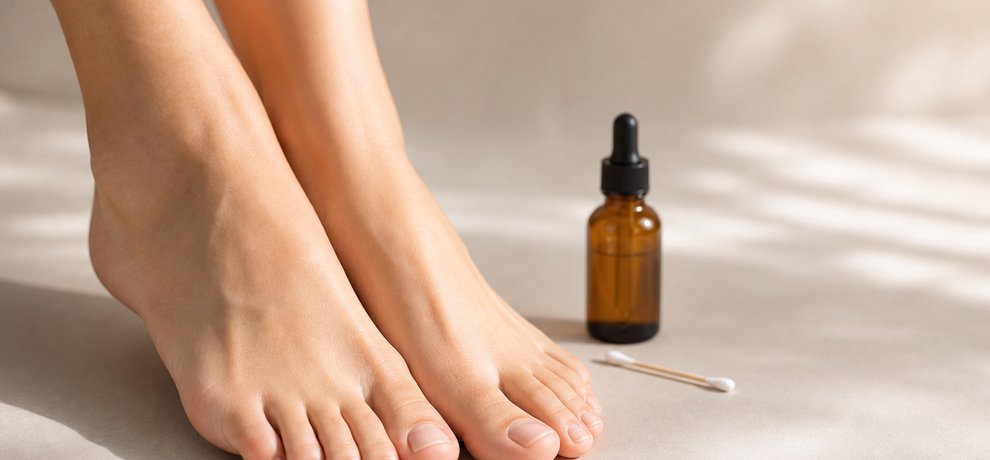
Overall wellbeing often depends on parts of the body we tend to overlook, such as the feet. Yet the feet carry the weight of the body every day and are exposed to many external stresses. Moisture, heat, friction, closed shoes or visits to public places can weaken the skin and nails, encouraging the appearance of various conditions, sometimes visible on the surface, sometimes settled more deeply. Nail fungus can develop slowly, without immediate pain, but with lasting consequences for the health of the nails and everyday comfort.
Faced with these situations, more and more people are looking for natural solutions that respect the body. Essential oils fit into this approach, offering solutions drawn from aromatherapy and recognised for supporting foot hygiene and care. Used with care, essential oils provide valuable complementary solutions to support the balance of the skin and nails, while fitting easily into a regular care routine.
Certain signs, such as a change in the nail, a weakened area or even a small bump around the nail, can be the first signals of an imbalance. Essential oils, chosen for their quality and their specific properties, allow you to act in a targeted way while respecting the skin and nails.
In this article, you will discover how essential oils can fit into suitable solutions to support nail fungus, while highlighting the importance of hygiene, patience and a holistic approach to foot health.
What is nail fungus?
Nail fungus, also known as onychomycosis, is an infection caused by microscopic fungi. These fungi, sometimes referred to as fungi, mainly develop in warm and humid environments. They can colonise the nail, the skin around the nail or the space between the toes.
The most common symptoms include a change in the colour of the nail, which may turn yellow, white or brown, gradual thickening, deformation, or even partial detachment of the nail. In some cases, sensations of discomfort, itching or cracks in the skin can appear around the affected area. If you notice a change in the colour of your nails, also have a look at our advice on natural solutions for yellow nails.
Nail fungus is contagious. Contamination can occur through direct contact with an infected surface, such as the floor of swimming pools or communal showers, or indirectly through shoes, towels or nail clippers. Early care is essential to avoid spreading to other nails or to other parts of the body.
Causes and contributing factors of nail fungus
Nail fungus is mainly caused by the proliferation of microscopic fungi that develop under specific conditions. These micro-organisms, naturally present in the environment, can become problematic when the natural balance of the skin and nails is weakened. Among the most frequently involved agents are certain dermatophyte fungi as well as yeasts such as candida albicans, capable of colonising the nail and the surrounding tissues.
Moisture is one of the major contributing factors. Feet, often confined in closed shoes for long hours, create a warm and humid environment favourable to the development of fungi. Insufficient drying after showering, excessive perspiration or wearing non-breathable socks encourage this proliferation, particularly around the toes and the edge of the nail.
Heat also increases the risk of fungal infections. Summer periods, sporting activities or confined environments raise the local temperature and humidity, two ideal conditions for the multiplication of fungi. People who regularly visit communal places, such as swimming pools, changing rooms or public showers, are more exposed, especially when walking barefoot.
Repeated microtrauma to the nail is another important factor. Shoes that are too tight, repeated knocks or improper nail trimming can weaken the natural protective barrier of the nail. These small lesions make it easier for fungi to penetrate deeper and encourage the gradual onset of nail fungus.
Certain personal situations can also increase the risk of nail fungus. A weakened immune system, circulatory disorders, age or certain chronic conditions can make the body more vulnerable to fungal infections. Insufficient hygiene or, conversely, overly aggressive care can also disrupt the natural balance of the skin and nails.
Finally, indirect transmission plays a significant role. Sharing shoes, towels, nail clippers or files can facilitate the spread of fungi. Without suitable hygiene measures, a fungal infection can quickly spread to other nails or be passed on to other people.
Understanding these causes and contributing factors helps you adopt suitable preventive habits and limit the risk of recurrence. Combined with good hygiene and regular care, this vigilance is an essential step in protecting the health of the nails and feet over the long term.
Essential oils to help with nail fungus
Essential oils are recognised for their many properties. Some of them are particularly used for fungal concerns thanks to their cleansing and purifying action.
Tea tree essential oil, obtained from melaleuca alternifolia, is one of the best known in this field. It is valued for its antifungal and antibacterial properties. Its composition helps limit the proliferation of the fungi responsible for nail fungus.
It can be used on its own or as part of a synergy with other oils.
Palmarosa essential oil is also interesting thanks to its purifying action, while laurel (Laurus nobilis) essential oil is traditionally used to support the comfort of the skin and nails. These essential oils can be combined to act in a complementary way.
Local application is preferred. It is generally carried out using a cotton swab, which makes it possible to target the affected nail area precisely, without excess. Regularity is a key element of the care, as nail regrowth is slow.
To support nail fungus effectively, it is essential to choose quality essential oils. They should be pure, natural and correctly chemotyped.
It is recommended to seek advice from a specialist adviser before any use. Consulting a healthcare professional remains essential in case of doubt, persistent infection or worsening of symptoms.
Natural recipes for nail fungus
It is possible to make simple preparations at home, in a do it yourself (diy) approach, by combining essential oils with a suitable vegetable oil. The vegetable oil dilutes the essential oils and makes it easier to apply them to the nail and the surrounding skin. Discover our essential oil recipe for nail fungus for a detailed and suitable preparation.
A classic preparation consists of mixing a few drops of tea tree essential oil with a vegetable oil. This type of preparation is applied locally to the affected nail, once or twice a day, according to the usage advice. Patience is essential, as the care must be continued for several weeks, or even several months, until the healthy nail has fully regrown.
Some recipes can include a synergy of several essential oils, such as tea tree, palmarosa and laurel, in order to optimise their action. Each preparation should be made in a clean bottle, preferably glass, and kept away from light.
The importance of hygiene in preventing nail fungus
Hygiene plays a fundamental role in preventing and supporting nail fungus. Simple habits help limit the risk of recurrence and support the effectiveness of the care.
It is recommended to wash the feet daily, then to dry them carefully, especially between the toes. Nails should be trimmed regularly and kept clean. Manicure or pedicure tools should be personal and disinfected after each use.
The choice of shoes is also important. Breathable shoes and socks made from natural fibres help reduce moisture. In public places such as swimming pools, it is best to wear sandals to avoid direct contact with the floor.
Tips for using essential oils
Essential oils are powerful and must be used with care. They should generally be diluted in a vegetable oil before application, in order to limit the risk of skin irritation.
Certain contraindications apply. Use is not advised for pregnant or breastfeeding women, or for children, unless on medical advice. A preliminary skin test is recommended before any first application.
Essential oils are not a substitute for a prescribed medical treatment. They fit into a complementary approach, aiming to support the health of the nails and general wellbeing.
The benefits of using essential oils
Using essential oils offers several benefits. They allow you to adopt a natural and gradual approach to support nail fungus. They fit easily into a daily care routine and can be used over the long term, in line with the recommendations.
In addition to their targeted action, they help improve the health of the skin and nails, while fitting into a holistic wellbeing approach. Regular use, combined with good hygiene and suitable habits, can help limit recurrences.
Nail fungus is a common condition that can settle in gradually and become persistent when it is not addressed early enough. It affects both the appearance of the nails and everyday comfort, and can have an impact on general wellbeing. Understanding its origin, identifying the contributing factors and adopting the right habits are essential steps to protect the health of the feet and nails over the long term.
Using essential oils is part of a natural and complementary approach, supporting rigorous hygiene and regular care. Certain essential oils, recognised for their cleansing and purifying properties, can support the care of nail fungus when they are chosen with care and used correctly. The quality of the essential oils, their dilution in a suitable vegetable oil and the regularity of application are decisive factors in obtaining visible results over the long term.
It is also essential to be patient. The full regrowth of a healthy nail takes time, and consistency in care plays a key role in limiting recurrences. Adopting preventive measures, such as maintaining good hygiene, drying the feet carefully, wearing breathable shoes and being cautious in public places, helps reinforce the effectiveness of the care and protect the nails over the long term.
Finally, essential oils do not replace medical advice. In case of doubt, persistent pain or worsening symptoms, consulting a healthcare professional remains essential. Used wisely, they can nonetheless fit harmoniously into a holistic care routine focused on prevention, comfort and respect for the natural balance of the body.


