





The processionary caterpillar does not bite and does not really sting. Its microscopic hairs, released as soon as it feels threatened, cause the reaction commonly called a processionary caterpillar sting. Redness, itching, a burning sensation: the symptoms are surprisingly intense, sometimes without ever having touched the insect. Reacting properly in the first few minutes limits the spread of the urticating hairs. Aromatherapy can then help soothe the skin. Here are the useful steps and the active compounds to know.
Processionary caterpillar: why we wrongly talk about a sting
Two species are a problem in France. The pine processionary caterpillar is mainly active from winter to early spring. The oak species appears rather from May to July. Both move in single file, hence their name.
The danger does not come from a bite. Each caterpillar carries hundreds of thousands of tiny hairs that detach at the slightest stress. These hairs contain an urticating protein, thaumetopoein, responsible for the skin and allergic reaction. Their irritant power lasts a long time, including on a nest that has fallen to the ground or on a dead caterpillar.
These hairs are airborne. Wind, the rubbing of clothing or simply walking under an infested tree is enough to deposit them on the skin. A reaction can therefore occur without ever having seen the caterpillar. This is also why the reaction sometimes seems to spread: scratching redistributes the hairs to other areas of the body.
The nest is easy to spot. It looks like a large white cottony ball, wedged between the branches, often criss-crossed with silk threads. Its presence signals a risk area, to be avoided without ever touching it.
The symptoms of contact with urticating hairs
The signs depend on the area touched and on individual sensitivity. They can be immediate or appear several hours after contact.
On the skin
The skin reaction is the most common. Red patches, small clustered bumps, sometimes violent itching, a burning sensation: the signs appear within a few minutes to eight hours. Uncovered areas are the most exposed: neck, forearms, hands, face. Scratching makes things worse by opening the skin and dispersing any hairs still present.
On the eyes and airways
When a hair reaches the eye, conjunctivitis can develop one to four hours after contact: a red, watery eye, with a foreign body sensation and ocular discomfort. A hair driven deep into the cornea can cause lasting discomfort and require an ophthalmologist. Inhaled, the hairs irritate the throat and the bronchi. Coughing, sneezing and breathing discomfort are possible, especially in people with asthma.
The severe allergic reaction
More rarely, contact triggers a generalised reaction: widespread hives, swelling of the face or throat, difficulty breathing, faintness. These signs may point to a severe allergic reaction, close to anaphylactic shock, which calls for an immediate call to the emergency services on 112. According to the French agency Anses, the vast majority of exposures remain mild, with 96.3 % of low severity. This serious risk, although infrequent, does exist in sensitised people.
A real danger for animals
Dogs and cats are particularly exposed, often by licking the ground during a walk. Contact with the hairs causes excessive salivation, swelling of the tongue or nose, sometimes serious lesions. Faced with these signs, rinse with water without rubbing and consult a vet urgently, as the outcome depends on how quickly care is given.
The right reflexes just after contact
The goal fits in one sentence: remove the hairs without dispersing them. The first reflex is not to scratch and not to rub, especially the eyes.
- Rinse the area with cold water and soap, without rubbing.
- Remove hairs left on the skin with adhesive tape, applied then peeled off as for waxing.
- Take a full shower, hair included, and change clothes.
- Wash exposed laundry at high temperature, without shaking it inside the house.
- Apply a cold compress to calm the inflammation and the pain.
These mechanical steps come before anything else. No application, even a natural one, replaces the removal of the urticating hairs. Once the skin has been cleaned and cleared of hairs, soothing can begin.
Soothing irritated skin naturally with aromatherapy
Once the hairs have been removed and the skin washed, aromatherapy takes over to help calm itching and redness. Two principles guide the gesture: dilute and target. Choosing the right essential oils makes all the difference on already reactive skin.
Spike Lavender Essential Oil is traditionally used after urticating contact. Rich in linalool and camphor in particular, it helps soothe sensations of skin discomfort such as itching or a burning sensation. In adults, 1 drop can be applied locally to the area concerned, up to 3 times a day maximum.
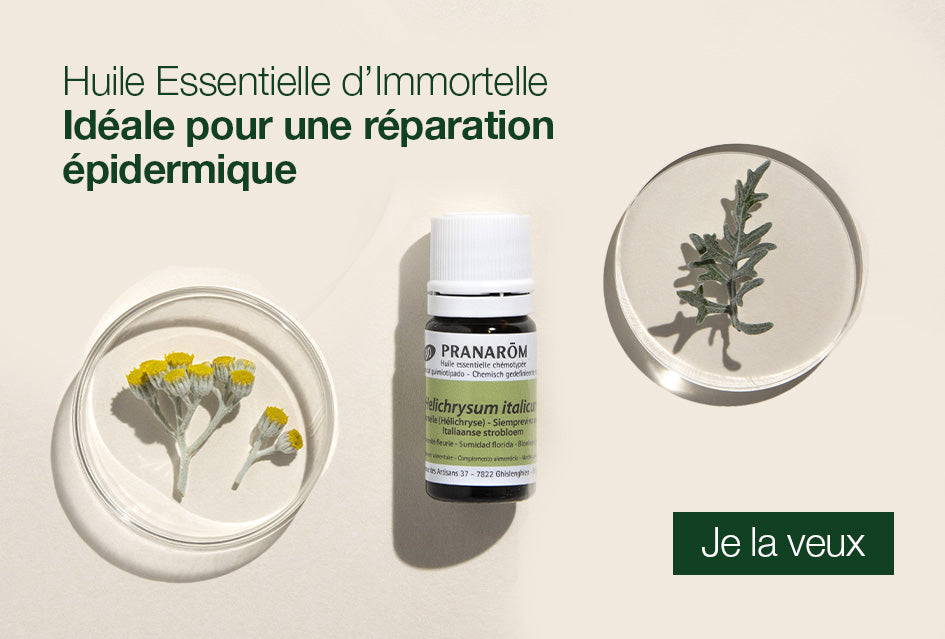
In addition, some Essential Oils can support fragile skin: Roman Chamomile is traditionally used to soothe discomfort in reactive skin, while Italian Helichrysum is known for its traditional use on bumps and skin marks. For small scratches caused by scratching, Tea tree Essential Oil brings its cleansing properties to care for the skin.
To support the repair of irritated skin, soothing skincare usefully completes these steps.
For children, pregnant women or fragile skin, hydrosols help soothe without risk. Roman chamomile or true lavender floral waters can be sprayed on the area, several times a day.
When to see a doctor and how to avoid a new exposure
Some situations call for prompt medical advice: eye involvement, breathing discomfort, an extensive reaction, symptoms in an infant or a young child. In case of serious signs such as vomiting, faintness, oedema or difficulty breathing, the emergency services must be called. A poison control centre can also give guidance in case of doubt. In people prone to allergic skin reactions, vigilance must be stepped up from the first signs.
Preventing a new exposure relies on simple steps. Do not go near nests or try to take them down yourself. Avoid hanging laundry near infested trees. Water the lawn before mowing it, to pin any hairs to the ground. Wear long sleeves, trousers and closed shoes on forest walks in spring. After an outing in a risk area, a shower and a change of clothes limit the transfer of hairs into the home. In case of infestation in the garden, it is better to contact the town hall or a specialist company than to intervene without protection.
Frequently asked questions
How long do the symptoms last?
The duration varies with the amount of hairs, the area touched and individual sensitivity. A mild skin reaction often fades within a few days. If the symptoms intensify or spread, hairs have often been redeposited: a shower and a change of clothes remain the best answer.
Is a processionary caterpillar sting dangerous?
In the vast majority of cases, the reaction remains mild. The serious risk concerns eye involvement, inhalation in vulnerable people and a generalised allergic reaction. These situations justify prompt medical advice.
Can essential oils be used on children?
In young children, Roman chamomile or true lavender hydrosols will help soothe the discomfort.


